Europe Calls It Sovereignty. Its Own Impact Assessment Says It Doubles the Price.
What happened?
On 3 June 2026 the European Commission put forward a package meant to make Europe less dependent on other people's technology — chips, cloud, AI and open source, bundled together.
Why did it happen?
Europe is being squeezed from two sides at once. China makes far more than it consumes and sells the surplus here. Washington has been imposing trade measures on Europe too — so Brussels stopped assuming it could shelter behind either.
LikelyWho benefits?
Officially, European industry. But this is genuinely unclear — the batteries Europe already builds are mostly built by Korean and Chinese firms operating in Europe, so 'European capacity' and 'European companies' are not the same thing.

Who loses?
Anyone in Europe buying the things Europe wants to make itself. The Commission's own assessment found that excluding Chinese solar panels would more than double what European governments pay for them — and Europe would still be importing the raw material from China.
LikelyDoes “sovereignty” name the right problem?
This is the real argument, and it is not settled. One view: overcapacity is flooding Europe and walls are overdue. Another: Europe still leads where it matters, China's glut is mostly in the cheap end, and a China forced to consolidate becomes a harder competitor, not an easier one.
UncertainWhat happened?
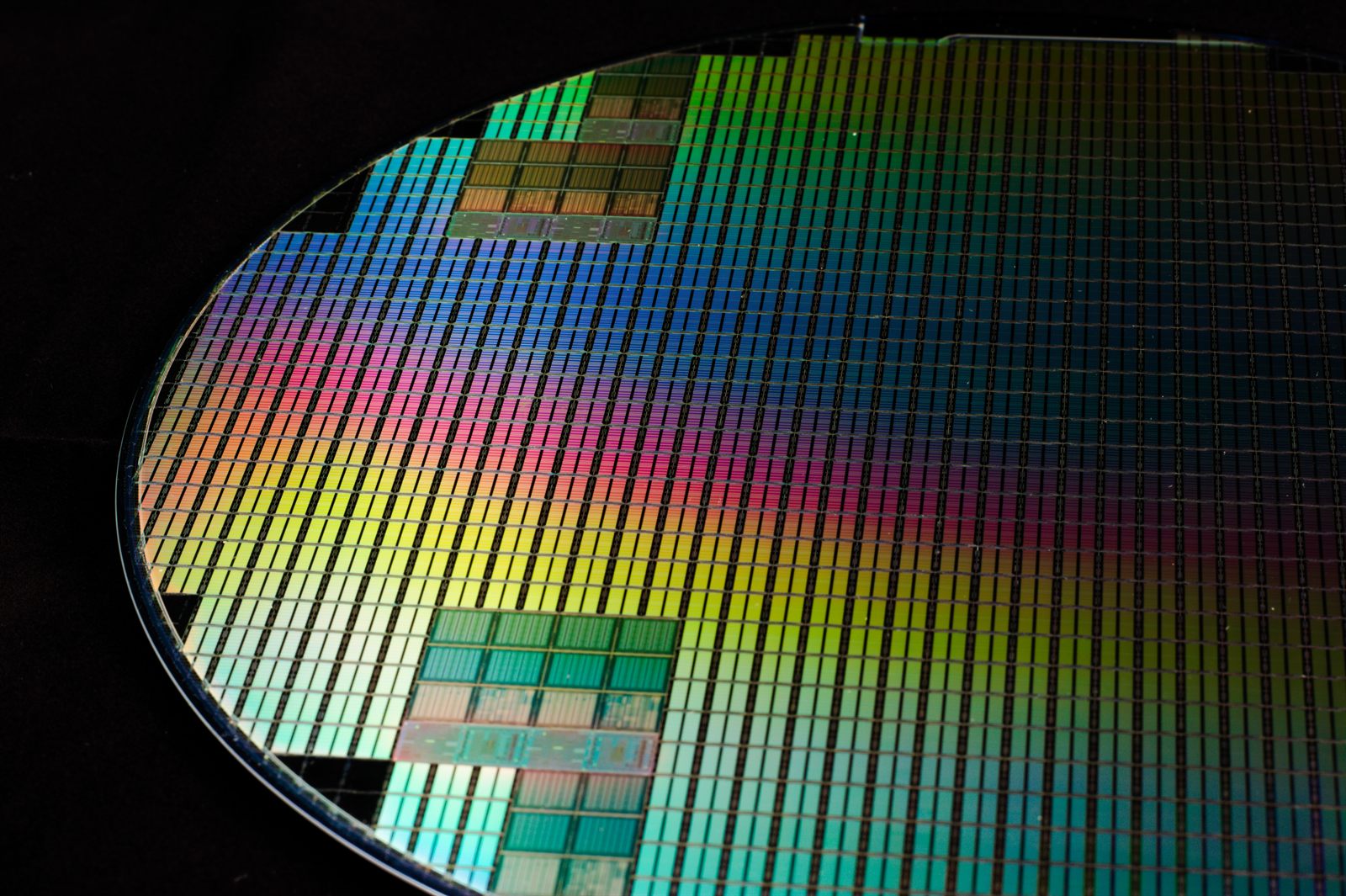
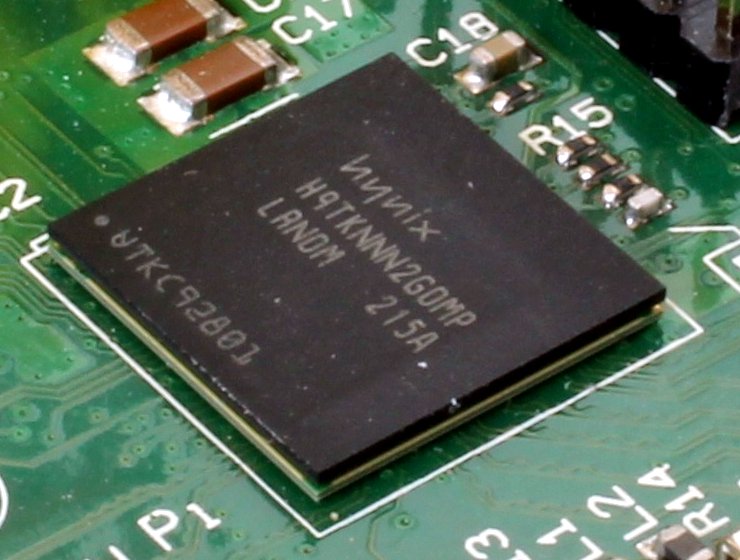
The Commission presented the European technological sovereignty package on 3 June 2026, comprising two legislative proposals — the Chips Act 2.0 and the Cloud and AI Development Act — alongside an EU Open Source Strategy and a Strategic Roadmap for Digitalisation and AI in Energy. The Chips Act 2.0 addresses capacity in cutting-edge semiconductor technologies; the Cloud and AI Development Act supports research, streamlines datacentre deployment and establishes an EU-wide framework for assessing cloud and AI sovereignty.
Why did it happen?
Two pressures converge. On one side, China accounts for roughly 30% of global manufacturing output while representing only 13% of global consumption, and the surplus is arriving: Chinese car exports to Europe rose 26% between 2024 and 2025 to almost 1.2 million vehicles, with hybrid imports up 155%. On the other, the EU is hedging against US unpredictability — the Trump administration imposed trade measures against the EU 'often with little regard for transatlantic alignment', which is precisely what makes a European capability agenda distinct from simply joining a US-led bloc. Reading these as one converging motive is our inference; the individual pressures are documented.
LikelyWho benefits?
The intended beneficiary is EU-based capacity in chips, cloud and AI. Whether that maps onto European firms is doubtful in the sectors where evidence exists: South Korean companies operate more than 75% of operational EU battery cell capacity, and Chinese firms are responsible for more than 66% of capacity under construction. A policy that succeeds at building capacity inside the EU may still deliver it to non-EU owners — which is a coherent outcome for supply security and a poor one for industrial policy, and the package does not clearly distinguish which goal it is pursuing. We are not confident either way.
Who loses?
The documented cost falls on European buyers and on the energy transition. On solar specifically, the Commission's own impact assessment estimates that origin-based content exclusions 'would more than double the price European governments pay for solar panels, while supply chains would still depend on polysilicon imports from China'. More broadly, origin requirements 'slow clean-energy deployment and raise input costs for EU industry without targeting the specific dependencies that genuinely threaten economic security'. Steel buyers face a parallel squeeze: the July 2026 measures cut tariff-free quotas 47%, from roughly 33 million tonnes to 18.3 million, and double out-of-quota duties from 25% to 50% through 2031.
LikelyDoes “sovereignty” name the right problem?
The critique is not that overcapacity is fictional but that the frame misdescribes it. Tröster, Papatheophilou and Raza argue a substantial share of China's excess output is 'being absorbed in the form of swelling inventories rather than export surges', that China's overcapacities are 'concentrated mostly in low- and mid-tier segments' while Europe retains technological leadership in semiconductors, hydrogen and robotics, and — the uncomfortable part — that 'a China that successfully consolidates around fewer, more productive, more innovative companies poses a sharper long-term challenge'. Bruegel's objection is different and structural: the 20% manufacturing target underpinning this agenda 'lacks economic rationale', was already set in 2012 and never achieved. If both are right, Europe is building walls against the China that exists today and arming the one that shows up in 2032. We do not think this is resolvable now, and we are not going to sound decisive about it to look authoritative.
UncertainDomino Effect
The causal chain so far, dated from what the sources actually report. New dominoes append as they fall.
The honest answer is that Europe would have decarbonised faster and cheaper, and woken up in 2035 with the grid built and the industry gone — which is roughly the trade the solar sector already made once. The counter-argument is not that walls are costless; the Commission's own assessment prices them. It is that dependency has a bill too, and it arrives all at once, on a date chosen by the supplier. Europe learned that from gas. The unresolved question is whether it has learned the right lesson or merely the loudest one: the gas dependency was on an adversary willing to weaponise it, and 'China might do to solar what Russia did to gas' is a hypothesis, not a finding. This is our reasoning, not a sourced counterfactual.
Corrections & revisions
noneEvery change to this analysis since publication, with the reason. We append here — we don't rewrite. A number that changes silently is indistinguishable from never having been wrong.
- No corrections yet. When we get something wrong, the fix is logged here rather than quietly applied.
Sources
Every source behind the Trust Index above. Follow them — a trust score you can't check is decoration.
- Strengthening Europe's tech sovereignty
- Europe has had enough of China's export surge
- As China's surpluses become unbearable, the EU is edging toward its own Section 301
- The flaws in the European Union's proposed Industrial Accelerator Act and how to fix them
- China's Overcapacity Problem Is Europe's Problem Too — But Not in the Way You Might Think
There is a particular kind of policy failure that only happens to institutions that have just been badly hurt. Europe spent fifty years believing trade converts adversaries into friends, discovered in one winter that it converts suppliers into creditors, and has now resolved never to be dependent again — on anything, on anyone, measured by nothing in particular. That is not a strategy; it is a flinch. The tell is the 20% manufacturing target: set in 2012, never met, never abandoned, and now load-bearing for an agenda that costs real money. Sovereignty is a word that sounds like an answer, which is exactly what makes it dangerous — it lets you skip the question of which dependencies actually kill you. Gas could be turned off in a day by a man who wanted to hurt you. Solar panels cannot. Treating those as the same problem is how you end up paying double for the wall and still importing the polysilicon.
— the founderNothing here stands alone. This story is one node in a wider web — every card is another thread you can pull.